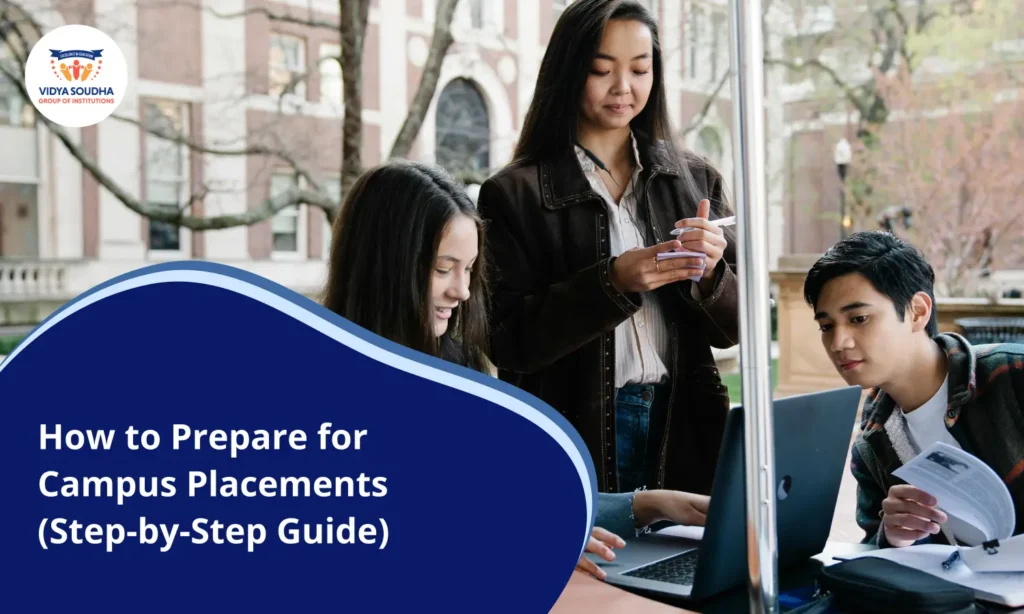
Placements stressing you out because you don’t know where to start? That confusion builds slowly and turns into stress, self-doubt and constant comparison with others. You keep moving between aptitude, technical topics and interview prep, yet nothing feels structured. This is where many students like you feel stuck, not due to lack of ability but due to lack of a clear plan.
Campus placements require focused preparation with the right steps taken at the right time. When you understand what to work on and how to approach it, the process starts to feel more clear and manageable.
In this blog, you’ll get all the help you need to prepare for campus placements in a simple and practical way.
When Should You Start Preparing for Campus Placements?
One of the biggest mistakes students make is starting too late or starting without a plan. And then everything feels rushed when placements are close.
Ideally, you should start preparing at least 3 to 6 months before placements begin. This gives you enough time to build your basics, practice regularly, and improve without pressure.
If you’re already closer to placements, don’t panic. You can still prepare well, but you’ll need to stay focused and follow a structured plan. What matters is starting with clarity and staying consistent from here.
Step-by-Step Guide to Prepare for Campus Placements
1. Understand the Placement Process and Expectations
Start by knowing exactly what rounds you’ll face. Check your college’s past placement records or ask seniors what companies visited and what rounds they conducted. Write down the common pattern so you know what to expect.
Then map your preparation to each round. For example, if the first round is aptitude, focus there first. If technical interviews are heavy for your target companies, spend more time on core subjects. This way, you’re not preparing blindly, you’re preparing with intent.

2. Build a Strong Foundation in Aptitude and Technical Skills
Start with aptitude and practice daily for 30 to 45 minutes. Focus on topics like percentages, ratios, time and work, and logical reasoning. First aim to solve questions correctly, then slowly work on improving your speed.
For technical preparation, your approach depends on your stream. If you’re from an IT background, choose one programming language and practice coding regularly. If you’re from a non-IT or core stream, focus on your main subjects and revise important concepts. Don’t try to study everything while making sure you can clearly explain the topics you already know.
3. Create a Clear and Honest Resume
Start by listing your actual skills, projects, and experiences. Then remove anything you can’t explain confidently. Keep your resume to one page and use simple formatting that is easy to read.
Prepare answers for everything you’ve written. If you mention a project, be ready to explain what you did, what tools you used, and what problems you faced. This preparation saves you from getting stuck during interviews.
4. Practice Mock Tests and Analyse Your Performance
Take at least 2–3 mock tests every week. Use a timer and treat it like a real exam. This helps you get comfortable with pressure and improves your time management.
After each test, spend time reviewing your mistakes. Note down the topics where you went wrong and revise them. If you keep repeating the same mistakes, focus more on those areas before taking the next test.
5. Prepare for Group Discussions and Communication
Practice speaking on simple topics for 2–3 minutes daily. Pick topics like current events or general issues and try to structure your thoughts before speaking. This helps you stay clear and confident during GDs.
During a GD, try to speak early if you have a point, but don’t interrupt others. Listen carefully and respond to what others say. This shows that you can work in a team and not just speak for the sake of it.
6. Get Ready for Technical and HR Interviews
For technical interviews, revise important concepts and practice explaining them out loud. Focus on commonly asked questions from your subjects and prepare clear, simple explanations.
For HR interviews, prepare answers to basic questions like “Tell me about yourself” and “Why should we hire you.” Keep your answers short and honest. Practice speaking them so you don’t hesitate during the actual interview.
7. Build Confidence and Learn from Rejections
After every interview or test, take a few minutes to reflect. Ask yourself what went well and what didn’t. Write it down so you can improve in the next attempt.
If you face rejection, don’t stop preparing. Instead, adjust your strategy. Maybe you need more practice in aptitude or better answers for interviews. Small improvements after each attempt will help you build real confidence.
8. Create a Simple Study Plan and Focus on Revision
Make a weekly plan instead of a complicated daily schedule. Assign specific days for aptitude, technical prep, and mock tests. Keep it realistic so you can follow it without feeling overwhelmed.
In the final week, stop adding new topics. Focus only on revising what you already know and taking a few mock tests. Sleep well and stay calm, because your performance depends on how focused and relaxed you are.

Conclusion
Preparing for campus placements becomes easier when you focus on the right areas and follow a clear plan. It’s not about studying all day, but about understanding what matters and working on it consistently. And when you balance aptitude, technical skills, and communication, you gradually build the confidence needed to face each round without panic.
If you’re looking for a degree college that actually supports you with placements, not just academics, Vidya Soudha Degree College is a strong choice. With a dedicated career counselling and placement cell, students get the guidance and preparation they need to move towards real placement opportunities. If placements matter to you, this is where you should enrol.