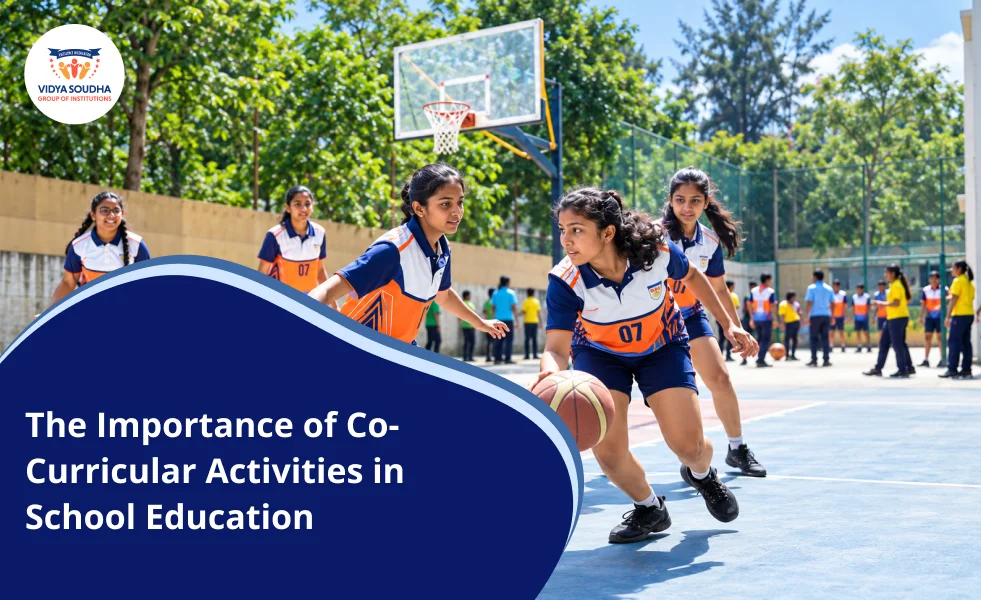
For most parents, academics are a major part of choosing the right school. Good grades matter, but a school experience focused only on textbooks, tests and marks can leave little room for children to develop confidence, communication and social skills. Some children may know the right answer but still hesitate to speak, participate or work with others.
That’s where co-curricular activities can make a real difference. Debates, sports, art, music, projects and other school activities give children space to explore their interests, take part and learn from experience. When these opportunities are thoughtfully included in school life, children can build practical skills while continuing to grow academically.
Why Co-Curricular Activities Matter in School Education
A well-rounded school experience goes beyond textbooks and examinations. Co-curricular activities give children opportunities to learn by doing, build practical skills and discover interests alongside their academic learning.
- Children learn in more ways than sitting through classroom lessons.
- The National Education Policy 2020 encourages experiential, arts-integrated and sports-integrated learning for holistic development.
- Co-curricular activities help students apply what they learn in practical settings.
- They encourage participation, communication, collaboration and exploration.
- Research links well-structured activities with academic, social and behavioural development.
- The impact depends on the type, quality and consistency of the activity.
- Purposeful activities are therefore more valuable than simply adding more activities to the school timetable.
7 Ways Co-Curricular Activities Support a Child's Overall Development
1. Build Confidence Through Participation
Confidence grows through doing, not just advice. A presentation, debate, performance or competition gives children a chance to speak, prepare and try again.
With regular participation, students can become more comfortable expressing an idea in front of others. For a quieter child, a small activity can be a useful first step in building their confidence.
2. Strengthen Communication and Social Skills
Group activities require children to listen, explain, respond and cooperate. Debates, drama, music and team activities create natural situations for practising these skills.
Students also learn to take turns, respect others’ opinions and handle disagreements. A 2024 review found that organised activities can provide opportunities for young people to build supportive relationships and social connections. These skills remain useful in college, work and everyday life.
3. Encourage Creativity and Independent Thinking
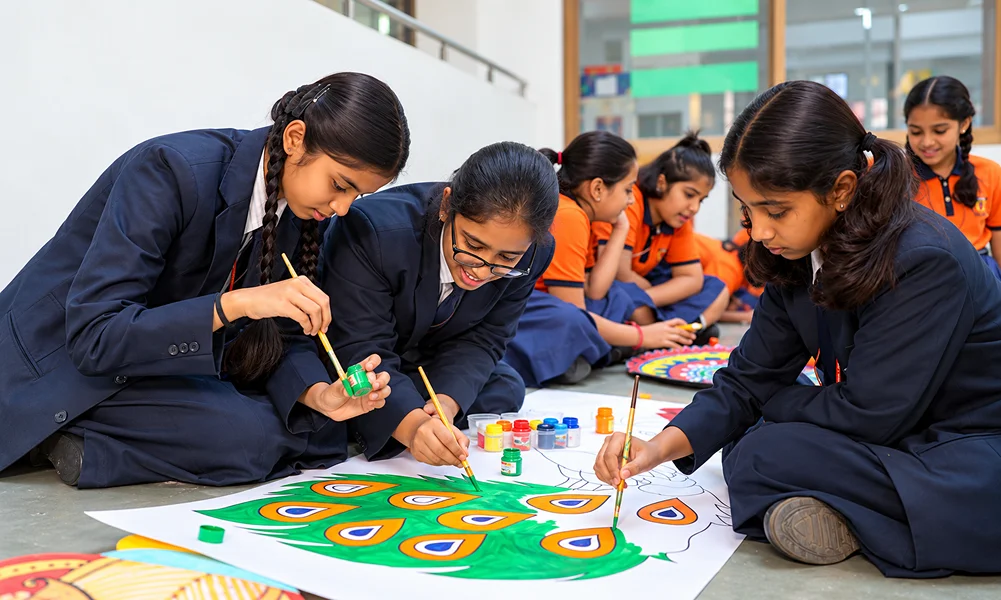
Children need opportunities to explore ideas instead of always looking for one fixed answer. Art, music, drama, science activities and problem-solving clubs can provide that space.
This also reflects NEP 2020’s focus on creativity, critical thinking and experiential learning. Students benefit significantly when they’re given the freedom to make choices and contribute their own ideas.
4. Develop Teamwork, Responsibility and Leadership
Leadership doesn’t always begin with becoming a school captain. Sometimes it starts with taking responsibility for one small task.
Sports teams, clubs, events and group projects can teach children to divide work, listen, meet deadlines and contribute to a shared goal. They also learn to work through different opinions. Children practise cooperation instead of only reading about it from books.
5. Build Discipline, Time Management and Perseverance
Dance routines, instrument practice and competition prep all demand the same thing: showing up and repeating the work even when progress feels slow.
This is where children learn to manage their time, stay consistent and push through the dip instead of giving up early. They also experience real wins and real disappointments, something no classroom lecture can fully teach. Over time, they come to understand that improvement is earned, not instant.
6. Encourage Physical Activity and Active Participation
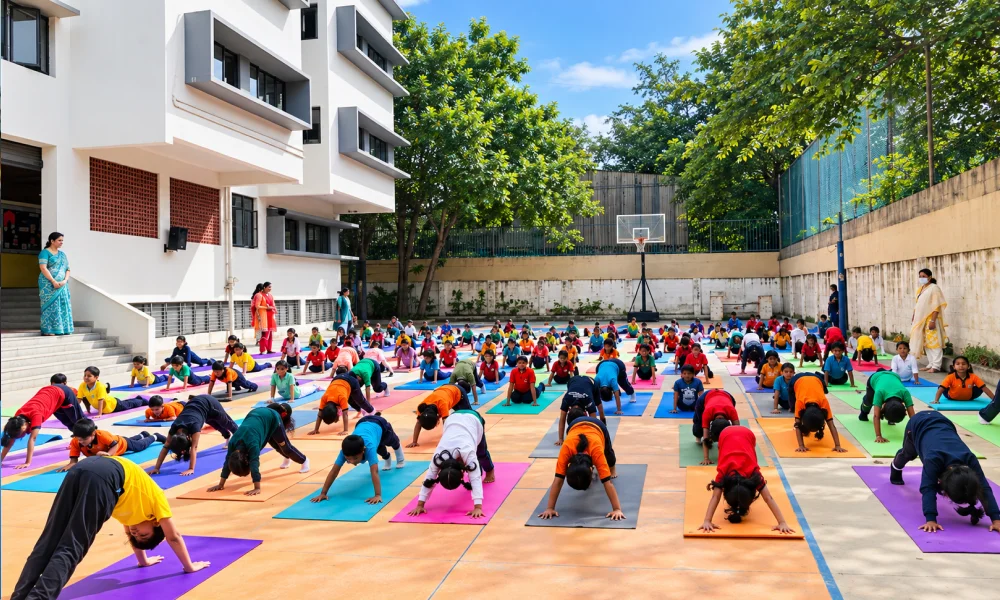
Sports, yoga, dance and karate give children a reason to move, build hand eye coordination and work alongside others, away from a desk.
Research has found a small positive association between sport participation and academic performance, although the evidence has limitations. A newer review also found positive effects from some school-based physical activity programmes.
7. Help Children Discover Their Interests and Strengths
Marks tell parents something about academic progress, but they don’t show every ability a child has.
A student may discover a love for music, art, robotics, public speaking, mathematics or sport after getting an opportunity to try it. These experiences help children understand what they enjoy and where they feel capable. It can also change how a child sees themselves.
Do Co-Curricular Activities Improve Academic Performance?
What Should Parents Look for in a School’s Co-Curricular Programme?
The number of activities on a school website doesn’t tell you how useful the programme is. Parents should look at how often children participate and what they actually do.
Look for:
- Variety across sports, arts, communication, science and technology
- Regular, age-appropriate opportunities
- Active participation and chances to take responsibility
- A sensible balance between academics, activities and rest
- Space for different interests and abilities
Ask what students actually do during an activity. That can tell you more than a long list of clubs.
How Vidya Soudha Public School Integrates Co-Curricular Learning
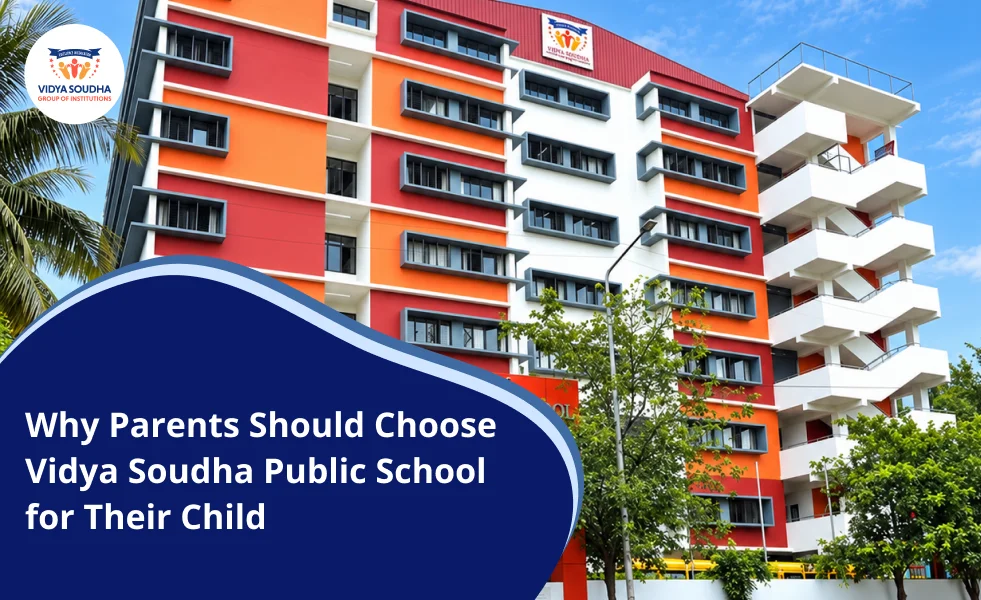
At Vidya Soudha Public School in Peenya, co-curricular learning is part of the wider ICSE school experience. Students can explore art, karate, dance, music, yoga, sports and robotics, while the primary section includes projects, role plays, quizzes and debates during CCA sessions. Our school also offers clubs for art, English, science, mathematics, Kannada, dance, media and computers.
These activities give students regular opportunities to communicate, collaborate, create and take part beyond the classroom. Our school was also recognised with the Best Co-Curricular Activities Award by Education Today in 2025 under its parameter-wise ICSE school category, reflecting its focus on providing students with varied co-curricular experiences alongside academics.
Conclusion
Co-curricular activities aren’t simply a break from academics. They give children opportunities to put what they learn into practice, build communication and teamwork skills, explore their interests and become more confident participants in school life. When balanced with strong academics, they can make a child’s school experience more engaging and well-rounded.
For parents looking for a school that focuses on holistic development, Vidya Soudha Public School combines its ICSE curriculum with sports, clubs, arts, music, robotics, yoga and other co-curricular opportunities. Visit our campus, today!