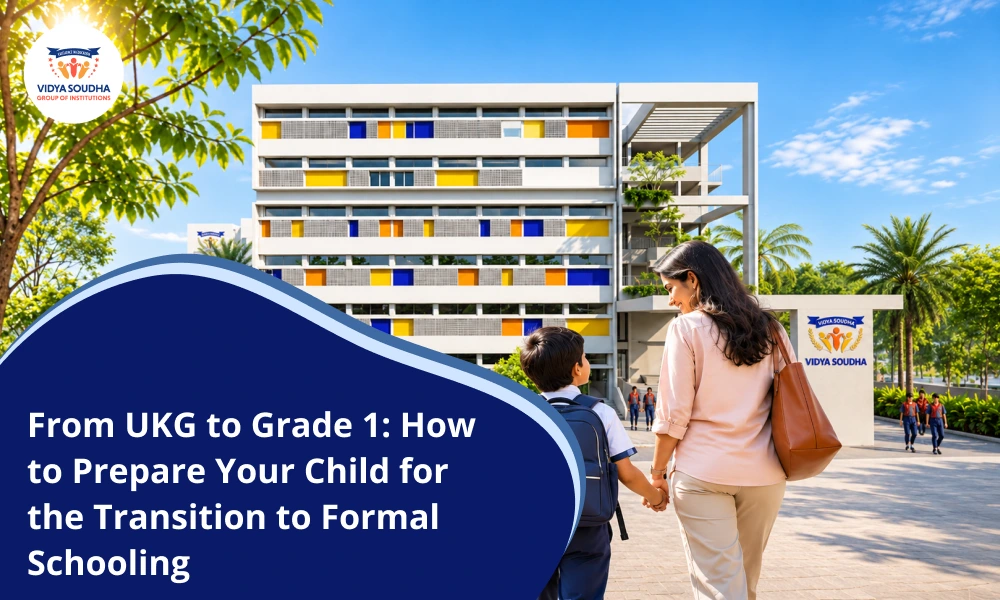
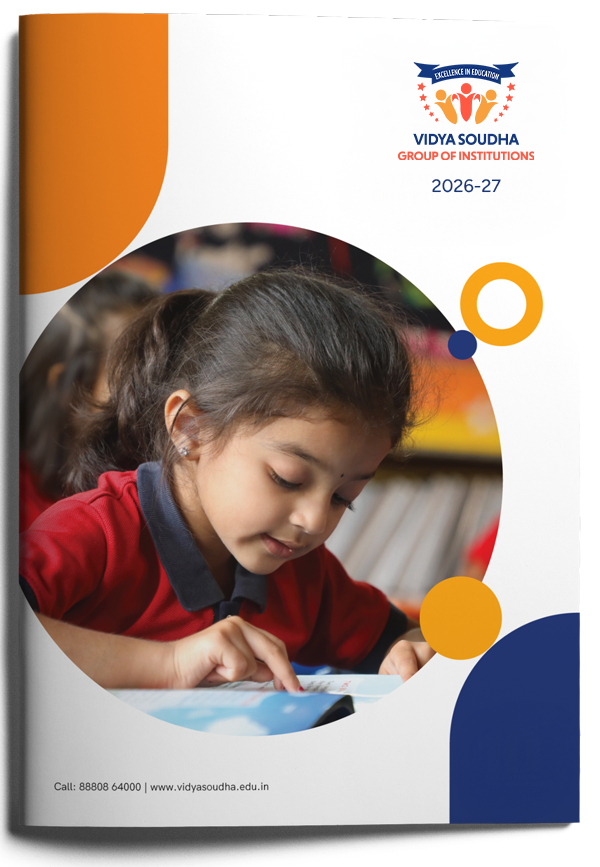
For most children, UKG feels like an extended playtime with a little learning mixed in. Grade 1 flips that ratio. There’s a timetable, a uniform that has to stay clean, a notebook for every subject and a teacher who expects them to sit through a full period. Some children walk in and settle within a week. Others cry at the gate until Diwali.
The difference is rarely intelligence. It’s preparation, and most of it happens at home in the months before school starts. This guide covers what changes from UKG to Grade 1, which skills matter, and what parents in Bangalore can do now to make the move smoother.
What Changes When Your Child Moves from UKG to Grade 1?
The jump from UKG to Grade 1 is the first real shift from play-based learning to structured, formal schooling. Children move from short, activity-led sessions to fixed periods, regular homework, written work in notebooks and subject-wise learning. They’re also expected to manage their own belongings and follow classroom routines with less help from adults.
In practical terms, here’s what your child will notice first:
- Longer school day: Most Grade 1 timetables run longer than kindergarten, with fewer breaks.
- Sitting and listening: Lessons need 30 to 40 minutes of focus at a stretch.
- Writing, not just colouring: Letters, words and numbers go into notebooks every day.
- More independence: Opening a tiffin box, finding the right book and using the washroom alone become everyday expectations.
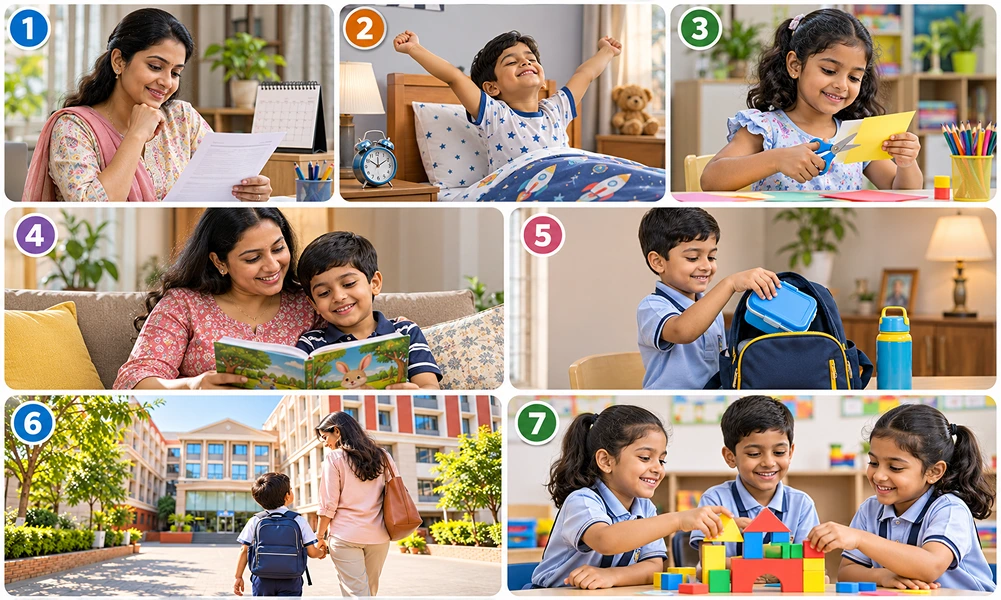
How to Prepare Your Child for Grade 1: 7 Practical Steps
1. Check the Grade 1 Age Requirement Early
Start here, because it decides everything else. Karnataka requires a child to have completed six years of age by June 1 to be eligible for Grade 1, in line with the RTE Act and NEP 2020. For 2026-27 the state gave a one-time 60-day relaxation, and rules for coming years may change again. Before you plan admissions, confirm the current age criteria with the school you’re applying to.
2. Build a School-Day Routine at Home
Children cope better when the day feels predictable. Two or three months before school begins, shift bedtime and wake-up time to match the school schedule. Fix a time for meals, play and a short “desk time” of 15 to 20 minutes. By June, waking up at 6:30 AM shouldn’t feel like a punishment.
3. Strengthen Fine Motor Skills Before Handwriting
Many parents push for neat handwriting and skip the step underneath it. If your child’s grip is weak, writing will tire them quickly and frustrate them faster. Activities that help:
- Play dough and clay: Rolling and pinching build hand strength.
- Beading and lacing: Improves finger coordination.
- Cutting with child-safe scissors: Trains control along a line.
- Drawing on a vertical surface: A wall chart or easel strengthens the wrist.
Once these feel easy, tracing letters and numbers comes naturally.
4. Encourage Reading Together Every Day
Ten minutes of reading aloud each day does more than any phonics app. Let your child pick the book, point at words as you read, and ask what they think will happen next. Bilingual homes can read in both languages (it helps, not confuses). Children who are used to listening to stories find it far easier to follow a teacher’s instructions in class.
5. Teach Self-Help Skills
A Grade 1 teacher manages 25 or more children at once. She can’t tie every shoelace. Practise these at home:
- Opening and closing the water bottle and tiffin box
- Packing and unpacking the school bag
- Using the washroom independently and washing hands
- Wearing and removing shoes
Small wins here build confidence, and confidence carries into the classroom.
6. Talk About School Positively
Children pick up on parental anxiety quickly. Avoid lines like “Wait till you go to big school, then you’ll see.” Instead, talk about the new friends, the library, the sports period and the fun of learning new things. If possible, visit the school before the first day so the building and the classroom feel familiar.
7. Focus on Social and Emotional Readiness
Academic skills get the attention, but emotional readiness decides how the first month goes. Can your child wait for their turn? Share crayons? Tell a teacher when they’re upset? Playdates, group activities and simple board games teach turn-taking and handling small disappointments. If your child struggles with separation, practise short goodbyes and keep them brief and consistent at the school gate.
Common Mistakes Parents Make During the UKG to Grade 1 Transition
Pushing academics too hard is the most common one. Enrolling a five-year-old in three tuition classes before Grade 1 often backfires, turning learning into a chore before school has even begun. Comparing your child with a cousin or a neighbour’s child is another. Children develop at different speeds, and early readers aren’t always the strongest learners by Grade 3.
The third mistake is ignoring the signals. If your child is regularly anxious, withdrawn or complains of stomach aches on school mornings in the first few weeks, talk to the class teacher early rather than waiting it out.
Why the Right School Makes the Transition Easier
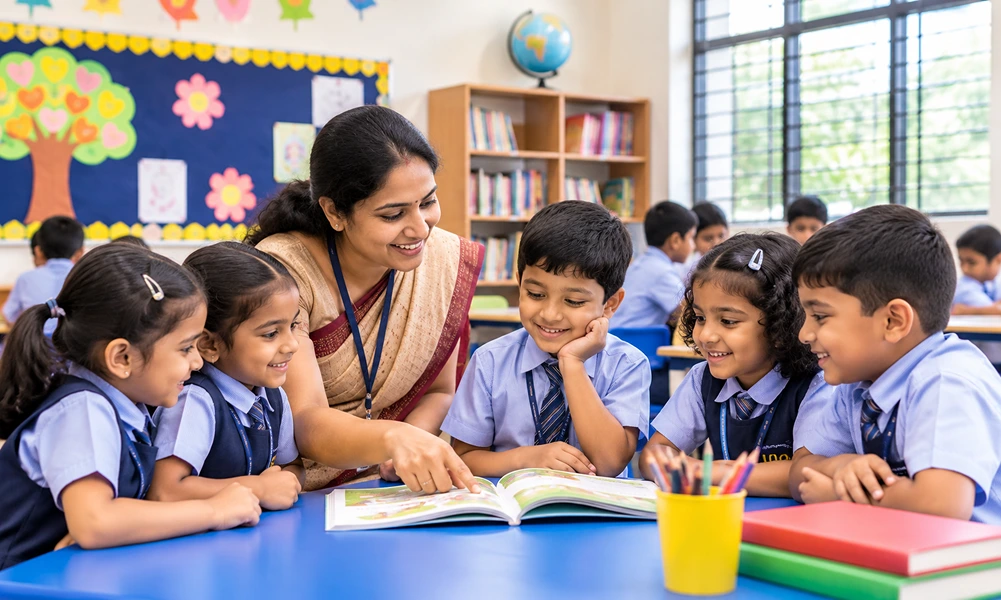
Home preparation only goes so far. The school’s approach to Grade 1 matters just as much. Look for a school that eases children into formal learning rather than rushing them, keeps class sizes manageable, and balances academics with sports, art and activities. Ask how teachers handle the first few weeks, and whether parents get regular updates on how their child is settling in.
Give Your Child a Confident Start at Vidya Soudha Public School
The move from UKG to Grade 1 sets the tone for your child’s entire school journey, so the school you choose for this step matters.
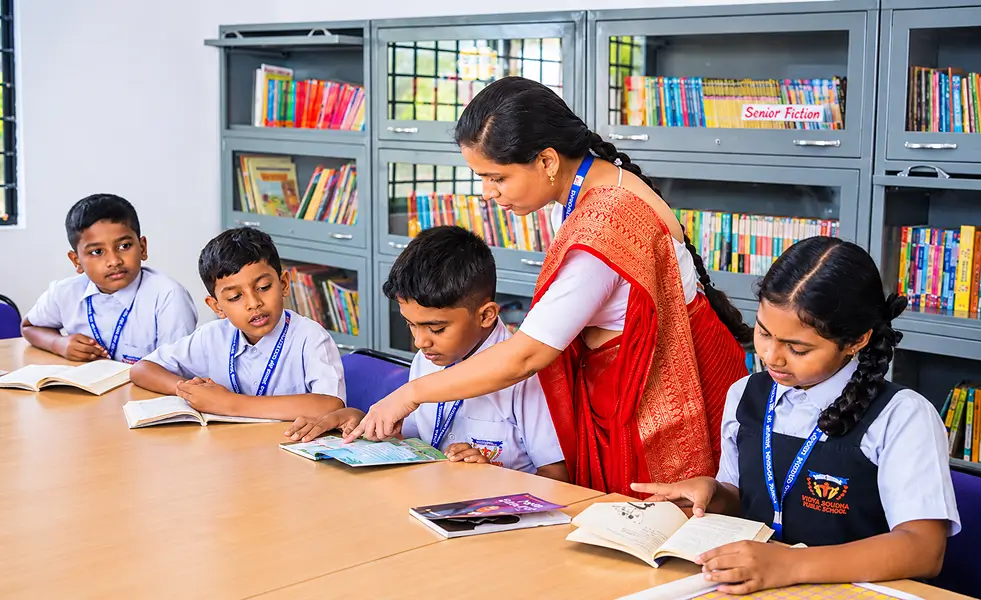
Vidya Soudha Public School in Peenya, Bangalore, follows the ICSE curriculum from Grade 1 to Grade 10, with a student-teacher ratio of about 1:25 so teachers can give each child the attention they need in those early months. Smart classrooms, a well-stocked library, and co-curricular programmes like Sampoorna Gyan, along with sports, music, dance, art and Abacus, help young learners grow beyond the textbook. Safety is built in too, with CCTV, a full-time nurse and GPS-tracked buses with lady attendants.
Admissions for 2027-28 are now open. Visit the campus, meet our teachers, and see how we help children settle into formal schooling with confidence. Call 88808 64000 or write to enquiry@vidyasoudha.edu.in to book a visit.