Ever noticed how kids copy actions and sounds before they start speaking clearly? They clap, repeat small words, and try saying full lines in their own way. That’s how early speaking begins.
Rhymes support this process. They don’t directly teach kids to speak, but they help children recognise sounds, remember patterns, and connect words with actions. And since it feels like play, kids are more willing to repeat and try.
In this blog, you’ll find the most popular English rhymes for preschool learning that help children stay engaged, build memory, and get comfortable with speaking, along with simple ways to use them at home.
Why English Rhymes Are Important for Preschool Learning
1. Builds Language and Vocabulary
2. Improves Memory and Listening Skills
3. Develops Social and Emotional Skills
4. Supports Early Cognitive Development
Rhymes introduce simple patterns and sequences, and these small things slowly help children build the thinking skills they need for reading later.
Using rhymes daily helps children develop these skills without pressure.
Top 8 Popular English Rhymes for Preschoolers
If your child struggles to stay engaged, the right rhyme can change that. It grabs attention, gets them involved, and makes them repeat words naturally.
Start with one rhyme, repeat it daily, and once they’re familiar, add the next.
1. Twinkle Twinkle Little Star
Twinkle, twinkle, little star,
How I wonder what you are.
Up above the world so high,
Like a diamond in the sky.
Twinkle, twinkle, little star,
How I wonder what you are.
2. Johnny Johnny Yes Papa
Johnny, Johnny,
Yes, Papa?
Eating sugar?
No, Papa.
Telling lies?
No, Papa.
Open your mouth,
Ha ha ha!
3. Mary Had a Little Lamb
Mary had a little lamb,
Its fleece was white as snow,
And everywhere that Mary went,
The lamb was sure to go.
It followed her to school one day,
Which was against the rule,
It made the children laugh and play,
To see a lamb at school.
4. Humpty Dumpty
Humpty Dumpty sat on a wall,
Humpty Dumpty had a great fall.
All the king’s horses and all the king’s men
Couldn’t put Humpty together again.
5. Baa Baa Black Sheep
Baa, baa, black sheep,
Have you any wool?
Yes sir, yes sir,
Three bags full.
One for the master,
One for the dame,
And one for the little boy
Who lives down the lane.
6. If You’re Happy and You Know It
If you’re happy and you know it, clap your hands,
If you’re happy and you know it, clap your hands,
If you’re happy and you know it, and you really want to show it,
If you’re happy and you know it, clap your hands.
7. Old MacDonald Had a Farm
Old MacDonald had a farm, E-I-E-I-O,
And on his farm he had a cow, E-I-E-I-O,
With a moo moo here and a moo moo there,
Here a moo, there a moo, everywhere a moo moo,
Old MacDonald had a farm, E-I-E-I-O.
8. Jack and Jill Went Up the Hill
Jack and Jill went up the hill
To fetch a pail of water.
Jack fell down and broke his crown,
And Jill came tumbling after.
How to Teach English Rhymes to Preschoolers Effectively
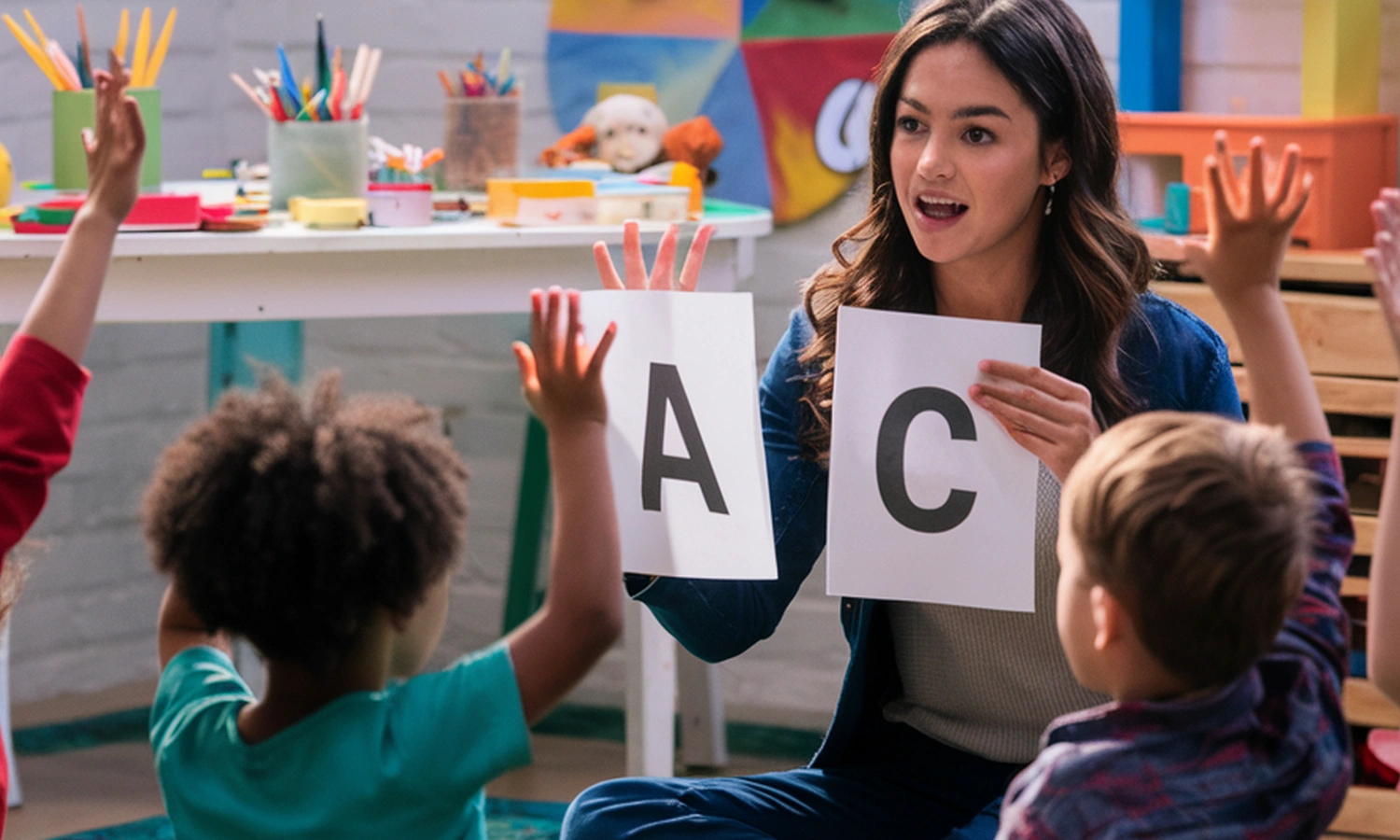
- Use Actions and Gestures: Add clapping, jumping, or hand movements so kids remember faster and stay involved. Even if they don’t speak at first, they’ll follow actions and pick up words slowly.
- Repeat Regularly: Repeat those rhymes daily as repetition helps children feel comfortable and confident with words, even if progress seems slow at first.
- Use Visuals and Props: Toys or pictures make rhymes feels more real. For example, a small lamb during “Mary Had a Little Lamb” makes it relatable and fun.
- Sing Along with Music: Play rhymes through audio or videos for variety, but also sing yourself so children connect with familiar voices.
- Encourage Participation: Let your child try even if they make mistakes, and avoid correcting too often. Gradually, they’ll start singing on their own without pressure.
Tips to Make Rhyme Time More Fun at Home
- Set a specific time each day so your child knows it’s a special routine.
- Let your child guess the next line or act out the words to make it engaging.
- Use silly voices, faces, or gestures to keep the rhyme lively and fun.
- Involve siblings or parents so it becomes a shared, social activity.
- Praise even small efforts; it motivates your child to participate confidently.

Conclusion
Rhymes may seem simple, but they play a big role in how children learn, speak, and express themselves. When learning feels natural and relaxed, kids stay curious, repeat words without pressure, and slowly build confidence. Singing, acting out lines, and sharing little laughs during rhyme time all add up to a strong foundation for future learning.
Along with rhymes, short moral stories are another easy way to build listening skills and values at home – explore our pick of short moral stories in English for kids to try next and if your little one is just starting this journey, our guide on first day of preschool activities for 3 year olds has more simple ways to ease them into learning.
If you want a place that truly supports this kind of playful learning, Vidya Soudha Kids is ideal. Our approach combines gentle guidance with fun activities, helping children grow at their own pace while making learning enjoyable for both kids and parents.