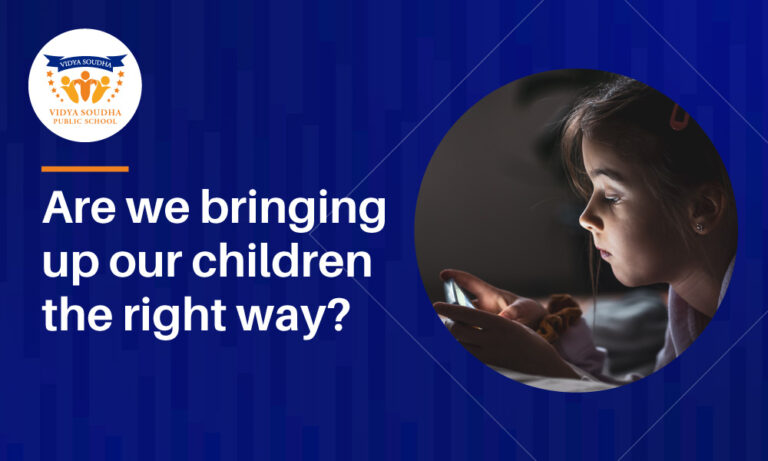
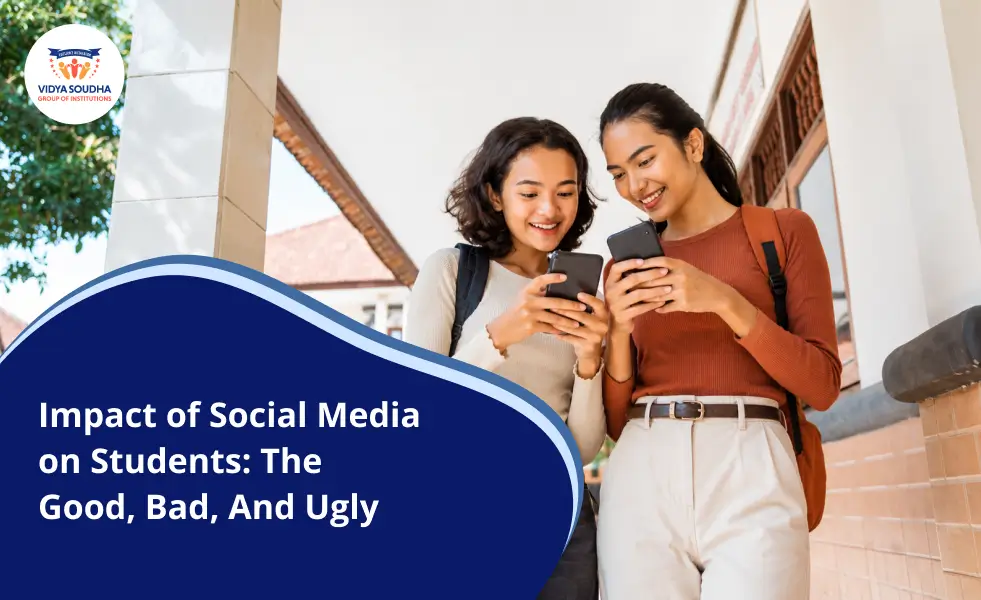
Social media has become an important part of student life. Whether it’s checking notifications between classes or scrolling through short-form videos late at night, students today are more digitally connected than ever. Recent data shows that teenagers now spend an average of about 5 hours a day on social media, and nearly 95% of kids aged 10-17 report using it almost daily. The level of engagement makes the impact of social media on students a debatable topic — because it cuts both ways, offering real academic benefits while also posing serious risks to mental health, focus, and well-being.
The Good: How Social Media Helps Students
1. Easier Access to Learning Resources
Platforms like Instagram, YouTube, and LinkedIn have become the next-gen classrooms. Educators post explainer videos, tutorials, and study tips that make complex topics easier to understand. College students use social media as an academic resource in some form, whether for research, revision, or to find new learning material.

2. Collaboration and Peer Support
Social media makes group work and peer collaboration much easier. Many students use social platforms to team up with classmates on assignments and projects. WhatsApp groups and shared docs linked through social apps allow students to coordinate outside the classroom without friction.
3. Growing Role in Formal Education
The impact of social media in education is now evident at the institutional level. Many college teachers and higher-education faculty now use social media as part of their teaching pedagogy, and for academic, professional, or communication purposes. Many teachers report that social platforms:
- Improve communication between faculty and students.
- Makes it easier to share updates, resources, and feedback in real time.
- Building Digital and Career Skills
Students who actively manage their social media presence often develop practical skills — content creation, communication, networking, and even early personal branding. Admissions officers and recruiters increasingly review students’ social profiles, and many students use platforms like LinkedIn to connect with mentors, internships, and job opportunities long before graduation.
The Bad: The Downsides Students Face
1. Mental Health Concerns
This is where the impact of social media on students becomes most concerning. Research published in JAMA Psychiatry links three or more hours of daily social media use to significantly higher rates of anxiety and depression among adolescents. This is a reminder that unchecked screen time carries real emotional cost.
2. Shrinking Attention Span
With excessive use of short-form content, attention spans have shrunk exponentially. The brain tends to expect constant novelty when using short-form content. Many college students admit to multitasking across three or more screens while studying, and research indicates that students who multitask with short-form content retain less information than those who focus on one task at a time. For a generation raised on rapid content, sustained concentration is becoming a difficult skill to master.
3. Distraction From Coursework
Even planned study sessions get derailed by notifications. The habit of checking a phone constantly often turns into 20 minutes of scrolling, cutting directly into study time and increasing procrastination — a pattern many students recognise in themselves but struggle to break.
The Ugly Side of Social Media

1. Cyberbullying and Comparison Culture
Social media platforms can increase peer pressure, unrealistic comparisons, and, in the worst case, cyberbullying. Constant exposure to curated, idealised versions of other people’s lives can quietly erode self-esteem, especially among younger, more impressionable students.
2. Sleep Disruption and Academic Performance
Late-night scrolling is one of the most common complaints among students and parents. Blue light exposure, endless scroll feeds, and algorithm-driven engagement loops keep students awake well past healthy bedtimes, which in turn affects concentration, memory, and academic performance.
Striking a Balance
The overall impact of social media on students isn’t about good or bad— it’s about how these platforms are used. Used intentionally, social media can support collaborative learning, resource sharing, and skill building. Used carelessly, it can chip away at focus, sleep, and mental well-being. Schools that thoughtfully embrace the impact of social media in education— through digital literacy programs, screen-time guidance, and structured use of platforms for learning — tend to see the most positive outcomes.
Some practical steps that help students find this balance include setting specific times for checking social media, muting non-essential notifications during study hours, and using apps that track and limit screen time. Small, consistent habits go much further than an all-or-nothing approach to digital detox.
Conclusion
Social media is here to stay, and for students, it’s about how they learn, socialise, and build their identities. Recognising both the opportunities and the risks is the first step toward healthier digital habits. With the right guidance from parents, educators, and students themselves, it’s possible to enjoy the genuine benefits of connectivity and learning while minimising the downsides of overuse.
At Vidya Soudha Group of Institutions, we understand the importance of leveraging social media without making it a hazard for students.