

Children learn more from stories than repeated instructions, and most parents notice this in daily life. Even when we explain values like kindness, honesty, or respect many times, children may not always remember them in the moment. But when the same lesson comes through a simple story, it tends to stay with them longer and feel more natural.
Telling a child “don’t lie” or “don’t behave like this” often doesn’t stay in their mind, but when they see honesty or dishonesty unfold in a story, they get it more clearly and remember it better. Long explanations also lose attention quickly because kids don’t think in rules, they think in pictures, situations, and what they can relate to.
That’s why small short moral stories in English help parents teach values in a simple way that actually sticks.
Why Short Moral Stories Are Important for Kids
Children understand ideas better when they see them through characters and situations instead of long explanations. Stories help them feel the message, not just hear it, which makes learning more natural and lasting. Short moral stories in simple English also work well because they are easy to read, finish quickly, and remember without effort.
Here’s why they matter:
- They teach values like honesty and kindness in a simple way
- They improve focus and attention span
- They build reading confidence step by step
- They help children understand real-life situations better
- They make learning feel fun instead of forced
Now let’s move to some simple stories children can enjoy and learn from.
7 Short Moral Stories in English for Kids to Read and Learn
1. The Lion and the Mouse
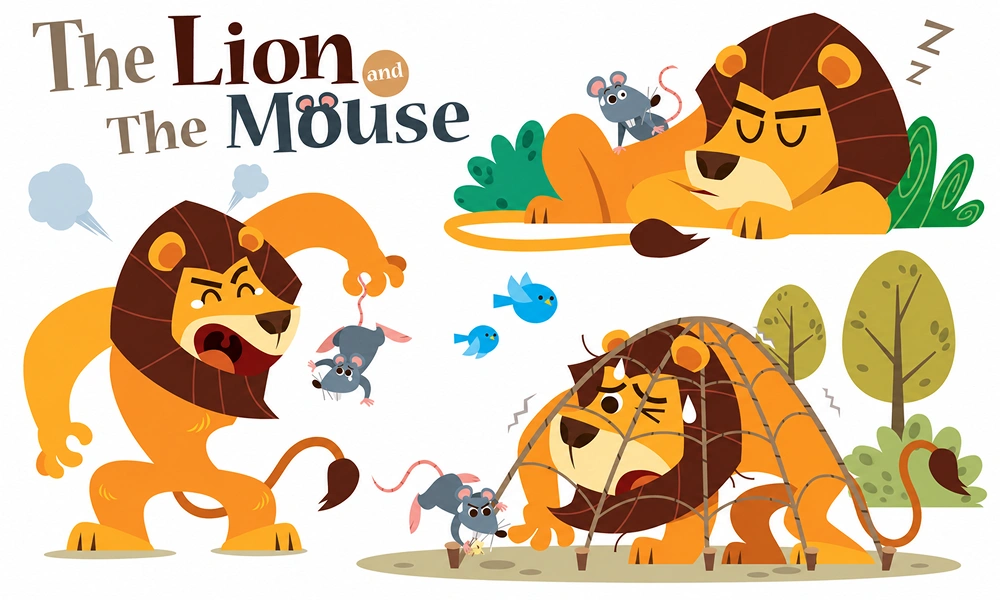
One day, a lion was sleeping peacefully under a big tree in the forest after a long hunt. A small mouse was playing nearby without noticing the lion and accidentally ran over his paw. The lion woke up at once, very angry, and caught the mouse under his huge paw.
The mouse was terrified and begged, “Please let me go. I didn’t mean to disturb you. I may be small, but I can help you one day.” The lion laughed at the idea but finally let him go.
Some days later, the lion got trapped in a hunter’s net. He roared loudly and struggled, but the ropes were too strong. The mouse heard him, came quickly, and bit through the ropes until the lion was free.
Moral: Kindness isn’t ever wasted.
2. The Boy Who Cried Wolf
A shepherd boy used to take care of sheep near a village. One day, he felt bored and shouted, “Wolf! Wolf!” The villagers rushed to help him, but there was no wolf. The boy laughed at the trick.
A few days later, he did the same thing again. The villagers came running once more, only to find no wolf. They got angry and stopped believing him.
One day, a real wolf came near the sheep. The boy shouted for help, but no one came because they thought it was another lie. The wolf scared the sheep away while the boy stood helpless.
Moral: Nobody believes a liar, even when they’re telling the truth.
3. The Ant and the Grasshopper
During summer, an ant worked hard every day collecting food and storing it for winter. A grasshopper nearby spent his time singing, playing, and enjoying the warm weather without saving anything.
The grasshopper often laughed at the ant and said there was plenty of time to worry later. But when winter arrived, everything changed. The ground became cold, and food was nowhere to be found.
Hungry and weak, the grasshopper went to the ant for help. The ant, who had stored enough food, kindly shared it with him. The grasshopper realized his mistake and understood the value of preparation.
Moral: Work today to enjoy tomorrow.
4. The Thirsty Crow
On a very hot day, a thirsty crow was flying in search of water. After a long time, he saw a pot with water inside near a house. He quickly flew down, hoping to drink.
But when he looked inside, the water was very low and he couldn’t reach it with his beak. He tried again and again but failed. The crow almost gave up because he was very tired.
Then he noticed small stones nearby. He picked them up one by one and dropped them into the pot. Slowly, the water level rose. At last, the crow was able to drink and flew away happily.
Moral: Where there’s a will, there’s a way.
5. The Fox and the Grapes
One afternoon, a hungry fox was walking through a vineyard when he saw a bunch of ripe grapes hanging high on a vine. The grapes looked juicy and sweet, and the fox’s mouth watered instantly.
He jumped to reach them but failed. He tried again and again, jumping higher each time, but the grapes were still out of reach. Tired and frustrated, he finally gave up.
As he walked away, he told himself, “Those grapes are probably sour anyway.” Even though he still wanted them, he acted like he didn’t care.
Moral: It’s easy to dislike what you can’t get.
6. The Tortoise and the Hare
One day, a hare saw a tortoise walking slowly and started laughing. “You walk so slowly,” said the hare. The tortoise smiled and said, “Slow or fast, we can still have a race.”
The hare agreed because he thought winning would be easy. When the race started, the hare ran ahead quickly and soon could not even see the tortoise behind him. Feeling confident, he stopped under a tree to rest for a while and soon fell asleep.
The tortoise kept walking slowly without stopping. When the hare woke up, he saw the tortoise crossing the finish line. He ran as fast as he could, but it was too late.
Moral: Keep going, even if progress feels slow.
7. The Honest Woodcutter
One day, a woodcutter was cutting wood near a river when his axe slipped from his hands and fell into the water. He looked into the river but could not find it. Sitting near the riverbank, he started worrying because he needed the axe for work.
Suddenly, a spirit appeared from the river and asked what happened. After hearing the story, the spirit went underwater and returned with a golden axe. The woodcutter shook his head and said it was not his.
The spirit returned again with a silver axe, but the woodcutter refused that too. Finally, the spirit brought back his old iron axe. The woodcutter smiled and thanked the spirit. Happy with his honesty, the spirit rewarded him.
Moral: Being honest matters, even when no one is watching.
How Parents Can Use Moral Stories for Better Learning
1. Read Stories Regularly
Reading even one short story every day helps build a strong reading habit. It doesn’t need to be long. What matters is consistency, not quantity.
2. Ask Simple Questions
Simple questions after reading help children think and connect with the story.
For example:
- What did you learn?
- Who did you like in the story?
- What would you do differently?
3. Encourage Children to Retell Stories

Conclusion
Stories may look simple on the surface, but they often stay with children for years. Small stories introduce important values slowly and naturally while making reading feel enjoyable. Over time, these lessons quietly become habits, thoughts, and everyday actions.
If you’re looking for more ways to build early language skills at home, our guide to Most Popular English Rhymes for Preschool Learning is a great next read and if your little one is just starting this journey, our guide on first day of preschool activities for 3 year olds has more simple ways to ease them into learning.
At Vidya Soudha Kids, learning goes beyond books because children learn through experiences, conversations, activities, and creativity. When children grow in an environment that encourages curiosity and confidence, learning becomes something they enjoy rather than something they simply do. Enroll today.