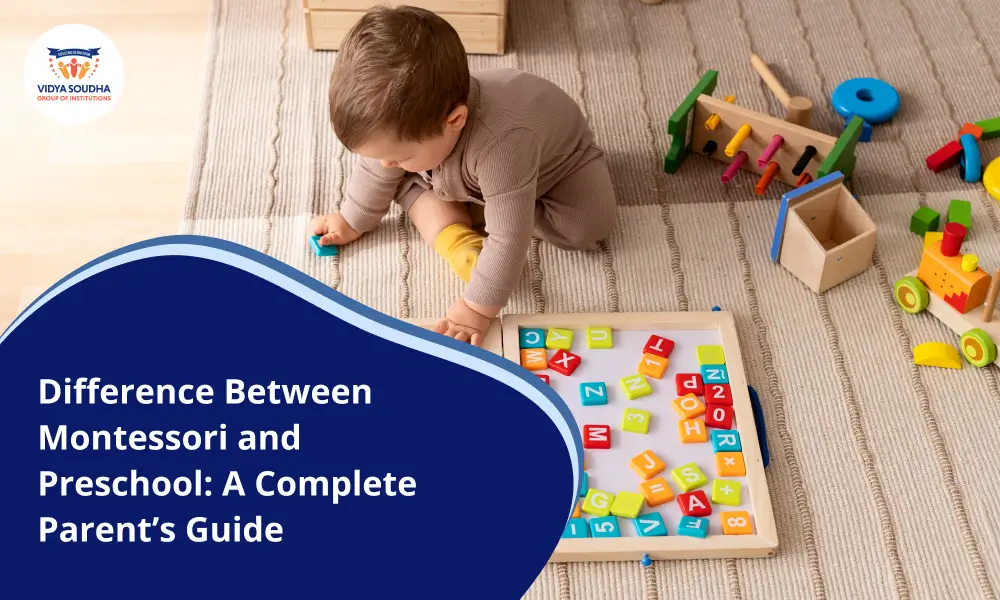
What is Montessori?
Montessori is an educational approach developed by Maria Montessori that focuses on self-paced, hands-on learning. It encourages children to explore, make choices, and develop skills independently while fostering creativity and critical thinking.
- Child-led learning with freedom to choose activities
- Mixed-age classrooms for peer learning
- Teachers act as guides, not instructors
- Hands-on, sensory-based learning materials
- Focus on life skills, independence, and emotional development
- Encourages curiosity, motivation, and responsibility
Montessori classrooms help children build confidence while learning at their own pace, making them engaged and self-motivated learners.
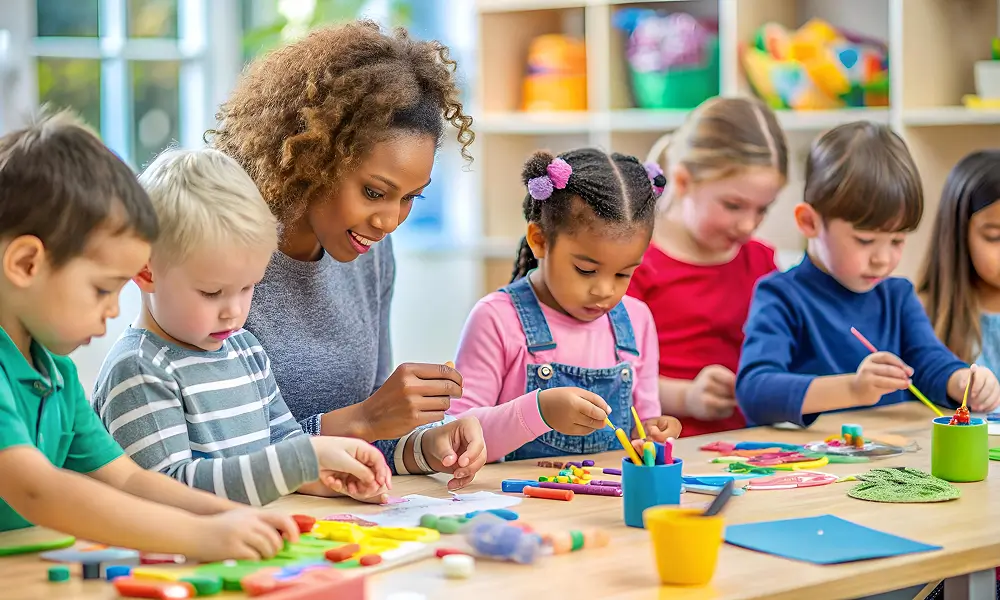
What is Preschool?
- Structured schedule with planned lessons
- Same-age classrooms with group activities
- Teacher-led instruction using play, songs, and storytelling
- Introduction to early literacy and numeracy
- Emphasis on social, emotional, and cognitive development
- Teaches routine, cooperation, and classroom behavior

Key Differences Between Montessori and Preschool
1. Teaching Approach
2. Classroom Environment
3. Role of Teacher
4. Curriculum Focus
5. Pace of Learning
6. Assessment
Montessori assessments are mostly observational as teachers here track progress and give you personalized feedback on your child. In preschools, assessments are often structured, including report cards and grading to monitor your child’s development.
Understanding these differences can help you choose a program that fits your child’s personality and learning style. Montessori encourages self-directed exploration and independence, while preschools provide structured learning and early social interaction. Both approaches have unique strengths and can support your child’s growth in meaningful ways.
Benefits of Montessori Education
- Independence: Children manage tasks, make decisions, and solve problems on their own, building early self-confidence and responsibility.
- Curiosity & Critical Thinking: Exploring topics they enjoy fosters creativity, questioning, and problem-solving skills.
- Emotional & Social Growth:Kids show patience, confidence, and teamwork, helping them navigate social situations effectively.
- Individualized Learning: Children progress at their own pace, mastering skills fully and feeling motivated.
- Self-Motivation & Awareness: Children become more aware, respectful, and intrinsically motivated to explore and learn
Benefits of Preschool Education
- Social Skills Development: Children learn sharing, listening, cooperation, and turn-taking in group settings.
- Early Academic Foundations: Basic literacy, numeracy, shapes, colors, and counting give children a head start.
- Creative Play & Expression:Arts, music, and imaginative play encourage creativity, self-expression, and problem-solving.
- Routine & Discipline: Daily schedules and classroom rules teach routines, discipline, and adaptability.
- Confidence & Readiness: Children feel comfortable, prepared, and motivated for primary school.
How to Choose the Right Early Learning Program
1. Child’s Personality
2. Your Priorities
3. Budget and Convenience
4. Class Size and Attention
5. Flexibility of Curriculum
6. Visiting and Observing
Spend time at potential schools, watch classroom interactions, and talk to teachers. Seeing the environment firsthand helps you know where your child will feel confident and happy.
Creating a simple checklist with these points can guide your decision and give you confidence that you’re choosing the right program for your child’s growth and happiness.
Quick glance at the differences between Montessori and Preschool
| Feature | Montessori | Preschool |
|---|---|---|
| Learning Approach | Child-led, self-paced, hands-on learning | Teacher-led, structured lessons and routines |
| Classroom Setup | Mixed-age groups, materials within easy reach | Same-age children, scheduled activities |
| Teacher Role | Guide or facilitator | Instructor and activity leader |
| Focus Areas | Independence, life skills, problem-solving, creativity | Early academics, social skills, play-based learning |
| Pace of Learning | Children learn at their own pace, repeat activities until mastered | Fixed pace, all children move through lessons together |
| Assessment | Observation and individualized feedback | Structured reports, grading, progress tracking |
| Skill Development | Self-motivation, critical thinking, emotional growth | Social skills, routine, early literacy and numeracy |
Conclusion
Choosing the right early education for your child can feel overwhelming, but understanding Montessori and preschool makes it easier. Montessori encourages independence, hands-on learning, and self-paced growth, while preschools focus on structure, early academics, and social skills. Both prepare your child for the next stage of learning, each in their own way.
If you want your child to thrive academically, socially, and emotionally, Vidya Soudha Kids in Bangalore offers a nurturing environment where your little one can grow with confidence, curiosity, and happiness every day.